Transforming "Sala-eng" into Heroes of the Modern Recycling World
Transforming "Sala-eng" into Heroes Saving the Modern World, Building a Recycling Society Through the Capacity Development Training Program for Sala-eng and ScrapSecond-HandShops Across Thailand — Another Key Force Driving the Country's Circular Economy
Most developed countries have been sorting waste for decades — that much is well known. But for Thailand, despite long-standing promotion efforts, the culture of "waste sorting" here seems unable to move forward.
In reality, waste sorting not only reduces environmental burdens — it also adds value to waste. Especially now that the government is pushing the BCG (Bio-Circular-Green Economy) Model, which emphasizes preserving resource value by reducing use, recycling, and building a new economy, it further highlights that transforming waste through recycling could be another industry playing a key role in driving Thailand forward.
"Waste" is "Resources"
While many see "waste" as a major national problem we'll soon have to confront, did you know that Thailand's "recycled waste" industry generates economic value of over 300 billion baht annually?
When talking about recycling "waste," one profession comes to mind as the true guru of waste management: "sala-eng" collectors and "scrap shops" — a business that has long been part of Thailand, yet rarely receives the social recognition it deserves, despite being an important mechanism in solving the country's waste problem.
Sala-eng collectors and scrap shops play a critically important role in the recycling business, serving as intermediaries in collecting and purchasing recyclable waste and used materials. They believe that "waste" can be transformed from a national burden into a valuable "resource" — simply by knowing how to recycle it.
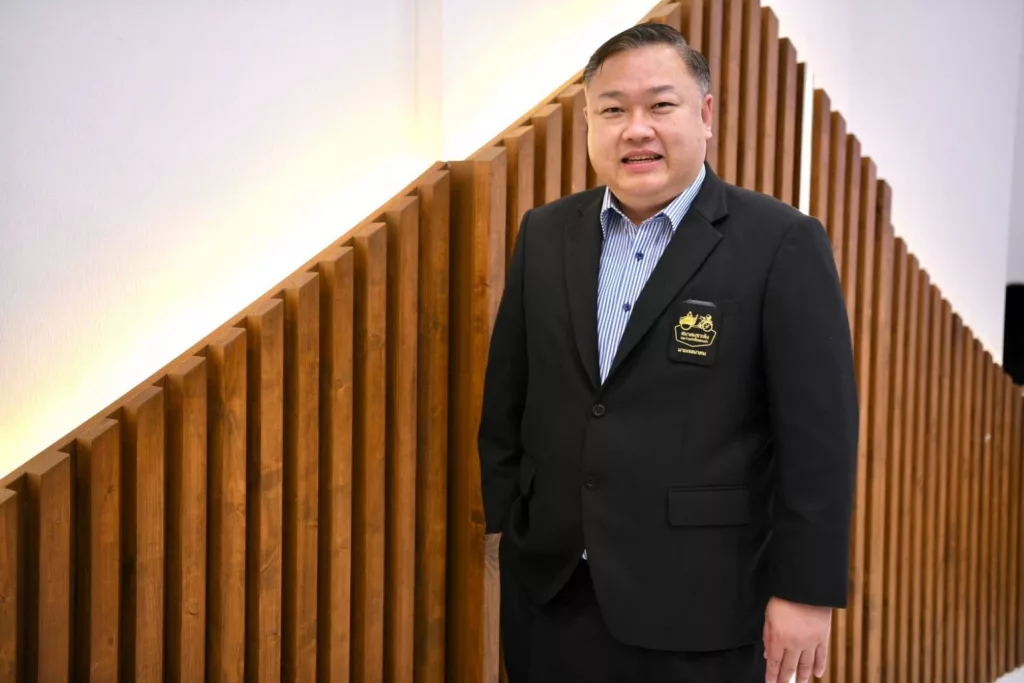
Chaiyut Polsen, President of the Sala-eng and Scrap Shop Association, stated that the sala-eng and scrap shop profession has existed in Thailand for over 100 years. In Thailand, sala-eng workers are the people who know waste sorting and recycling best — because this is their profession, and they sort waste every single day.
Sala-eng operators are one of the key links in the waste-sorting business chain. Driven by the desire to participate in building an ecosystem that elevates society by improving waste sorting and recycling efficiency in Thailand, sala-eng operators established the Sala-eng and Scrap Shop Association in 2020.
Chaiyut continued that the goal of establishing the Sala-eng Association arose from identifying problems and creating solutions — not only for sala-eng and scrap shop operators themselves, but also for elevating and enhancing waste and environmental management capacity nationwide. The Association currently has 34,000 members, though the actual number of people in the profession could be many times greater.
"We estimate there are approximately 20,000 registered scrap-buying shops with the Ministry of Interior. If each shop has an average of up to 50 sub-network operators, that suggests there are nearly one million sala-eng and scrap-buying workers in Thailand," Chaiyut stated.
Arming with Modern Waste Knowledge
As social and technological changes accelerate rapidly, sala-eng and scrap shop operators have set a goal to develop their own capabilities — arming themselves with knowledge and staying updated for the modern world.
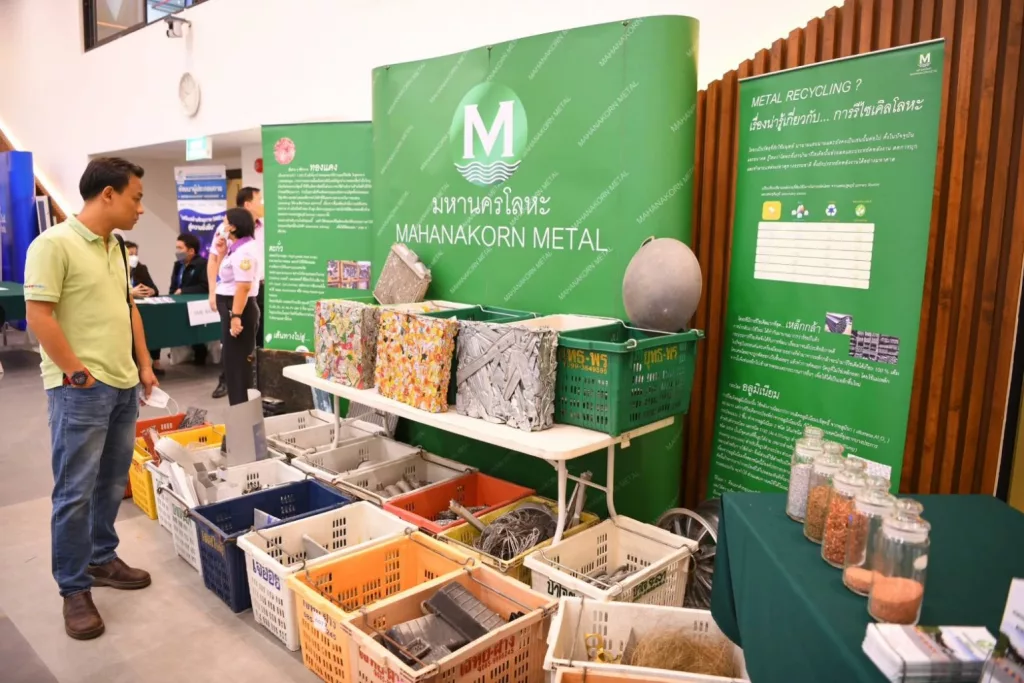
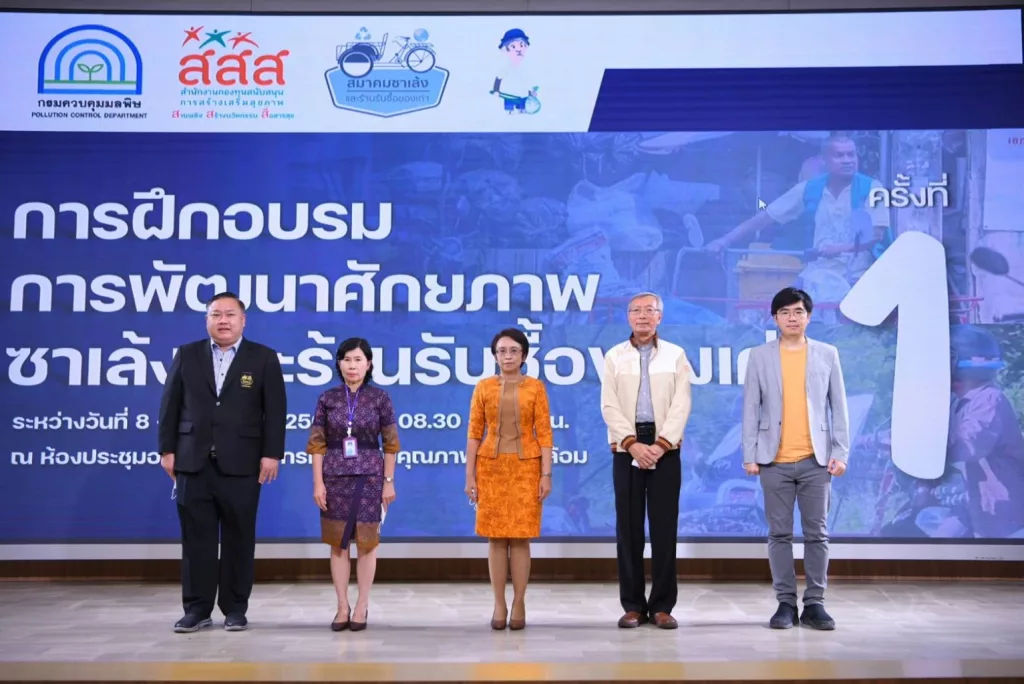
Sala-eng and scrap shop operators, with support from the Pollution Control Department (PCD) and the National Health Promotion Fund (ThaiHealth), jointly initiated the 1st Capacity Development Training Program for Sala-eng and Scrap Shops, under the Capacity Development Activity for Sala-eng and Scrap Shops, as part of the Project on Development and Management of Waste Separation and Recycling to Reduce Environmental and Health Impacts through a Participatory Process.

Preeyaporn Suwankaset, Deputy Director-General of the Pollution Control Department (PCD), stated that this event supports the policy for citizens to sort waste at the source, with sala-eng and scrap shops serving as a mechanism to ensure plastic scraps and packaging from households, buildings, offices, and other sources are returned as industrial raw materials — making "waste" not waste, but "resources" to be recycled, in line with Circular Economy principles and the BCG Model policy declared as a National Agenda, which will also support the plastic scrap import ban in 2 years.
"Today's training is the 1st of 5 capacity development sessions for sala-eng and scrap shop operators, to be held across the Central, Northern, Northeastern, Eastern, and Southern regions. Topics include knowledge on sorting each type of waste, appropriate work practices, precautions regarding hazardous materials that could affect worker health, the environment, and nearby residents, regulatory compliance, and use of the Recycle Hero application to enhance efficiency in buying and selling recyclable waste — so these operators become a key force driving the country's circular economy," Preeyaporn stated.
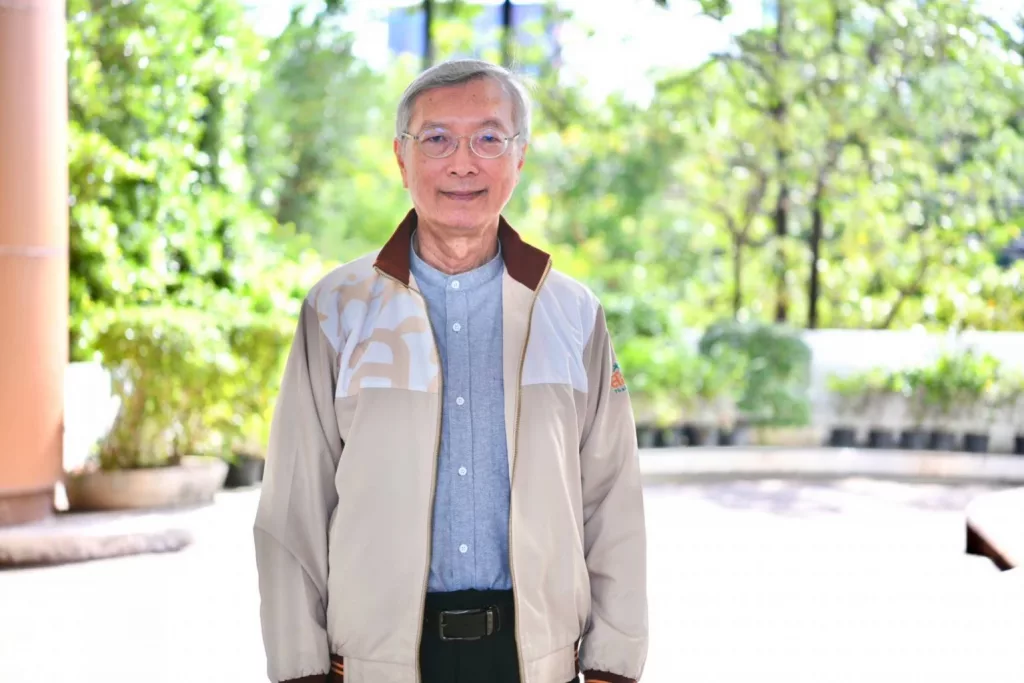
Sriswan Kuankhajorn, ThaiHealth Fund Committee Member, stated that changing attitudes about solid waste — viewing it as something that can be reused — adds value and income for the public and local administrative organizations while reducing production costs. Sala-eng and scrap shop operators must separate each type of material — glass, paper, plastic, aluminum, copper, and iron — without mixing, to increase resale value. However, this work can cause environmental impacts, heavy metal and toxic contamination in surrounding areas, and health risks for workers and community members from prolonged exposure. ThaiHealth therefore partners with the Pollution Control Department and the Sala-eng and Scrap Shop Association to systematically and comprehensively elevate operators' quality of life — physical, mental, and intellectual health — building knowledge of safe occupational practices, and forming organizational networks to reduce inequality.
The Real Experts in Recycling
Chaiyut described current challenges: "Orphan waste" — waste that cannot be recycled or resold — is growing, due to multiple contributing factors. Three years ago, of the 100% recyclable waste collected, 80% could actually be recycled. Today only 60% can be recycled, leaving 40% that must go to landfill, be burned as RDF (Refuse Derived Fuel), or risk ending up in oceans, rivers, and waterways.
"During COVID, collecting recyclable waste became more difficult, yet the volume of waste surged simultaneously due to the food delivery boom. Sala-eng operators had to collect waste with extreme caution, not knowing which items were contaminated. The situation has improved now, but waste volumes remain high. A new problem has emerged: waste intended for recycling now contains multiple plastic types mixed in a single item, making it non-recyclable — it becomes orphan waste, used once and discarded. We believe this trajectory will cause serious problems in the future," Chaiyut stated.
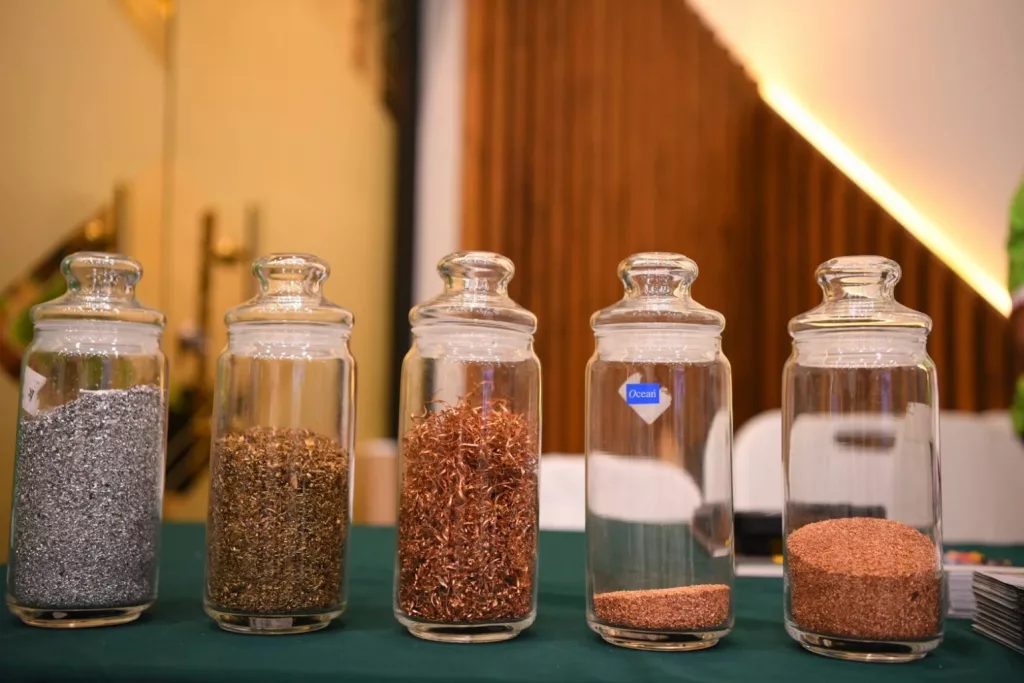
Chaiyut also noted that plastic waste is their greatest concern. Unlike glass bottles, cardboard, iron, or copper — which can always be recycled — today's plastics are produced from over 30 types of plastic pellets. The most recyclable types are PP and PE. However, manufacturers often mix multiple plastic types to reduce costs, which immediately breaks the recycling cycle.
"We've found that some plastics are mixed with bio-plastics that can self-degrade — but once mixed with other plastic types, they can no longer self-degrade. For a simple test: if plastic floats on water when submerged, it can be recycled. If it sinks, it cannot," Chaiyut stated.
Let's Reduce Orphan Waste Together
Chaiyut also offered tips on sorting plastic waste at home: start by identifying the type and whether it can be recycled. Check the bottom of the item for an arrow triangle or circle symbol with a number from 1 to 7. However, a current problem is that some manufacturers secretly mix plastic types, rendering the purchased waste non-recyclable.
"We're currently consulting with relevant agencies about whether we can replace the logo with a sala-eng truck symbol to solve this problem. If it says 100%, it's fully recyclable. 80% means acceptable but still has issues. 50% is borderline. 0% means problematic — we won't collect or buy it. Most importantly, I'd like to remind consumers: before sorting for recycling, rinse items one to two times to remove food residue, because when reprocessed, food residue produces odors or smoke during melting. For UHT milk cartons and juice boxes — which previously had no market — the Sala-eng Association now accepts them at 6 baht per kilogram. Consumers just need to rinse them once before selling," Chaiyut stated.
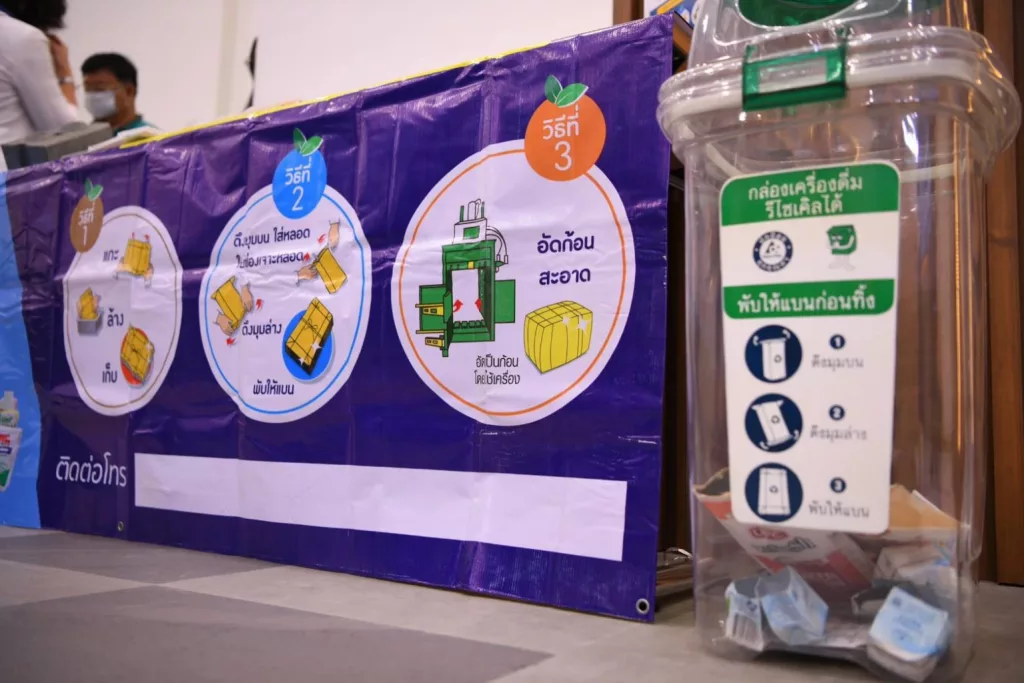
The newly developed "Recycle Hero" application is another tool created to enhance the efficiency of buying and selling recyclable waste for sala-eng collectors and scrap shop operators.
"This app was created with the intention of connecting buyers and sellers, since both parties have never been able to find each other — which is why recycling operators have been unable to source recyclable products and have had to apply for import permits for recyclable waste from abroad. This app will help sellers find buyers quickly. Our goal is to capture waste that falls through the cracks and bring it into the recycling system, and to reduce the waste import problem," Chaiyut concluded.
As we count down toward a waste overflow crisis, the cooperation of everyone involved in waste management — starting with "reducing waste" and "sorting waste" for recycling right at home — is essential.
Date: December 20, 2022 | Source: Krungthep Turakij (Bangkok Business)