Pollution Control Department – ThaiHealth Join Forces with Sala-eng and Second-Hand Shop Association to Urgently Upgrade Capacity in Line with BCG Principles
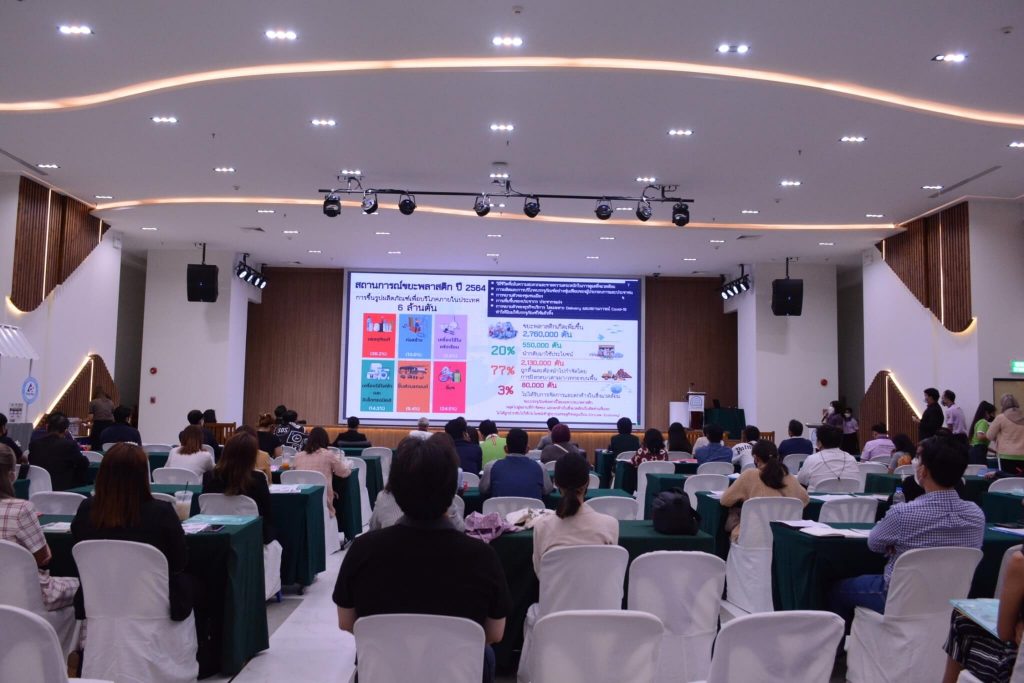
On December 8, 2022, the Pollution Control Department (PCD) organized the Capacity Development Training for Sala-eng and Scrap Shops, under the Capacity Development Activity for Sala-eng and Scrap Shops, as part of the Project on Development and Management of Waste Separation and Recycling to Reduce Environmental and Health Impacts through a Participatory Process. The program was funded by the National Health Promotion Fund (ThaiHealth), with support from the Sala-eng and Scrap Shop Association and the "Uncle Sala-eng and the Disappearing Trash" page. Mr. Pinsak Suraswadi, Director-General of the Pollution Control Department, delegated Ms. Preeyaporn Suwankaset, Deputy Director-General of the PCD, to preside over the opening of the training.

Ms. Preeyaporn Suwankaset, Deputy Director-General of the PCD, stated that the approach of sorting waste at the source — with sala-eng and scrap shops serving as a mechanism to return plastic scraps and various types of packaging from households, buildings, offices, and other sources as industrial raw materials — is to ensure "waste" is not "waste" but "resources" to be recycled, in line with Circular Economy principles and the BCG Model policy declared as a National Agenda. This also supports the plastic scrap import ban policy in 2 years. Sala-eng and scrap shop operators today play a critically important role in the recycling business as intermediaries in collecting and purchasing recyclable waste and used materials. Today's training is the 1st of 5 capacity development sessions — covering Central, Northern, Northeastern, Eastern, and Southern regions — providing knowledge on sorting each type of waste, appropriate work practices, precautions regarding hazardous materials to protect worker health and the environment, regulatory compliance, and use of the Recycle Hero application to enhance recycling trade efficiency, making these operators a key force driving the country's circular economy.
Mr. Sriswan Kuankhajorn, ThaiHealth Fund Committee Member, stated that changing attitudes about solid waste — viewing it as something reusable — adds value and income for the public and local administrative organizations while reducing production costs. Sala-eng and scrap shop operators must separate each type of material — glass, paper, plastic, aluminum, copper, and iron — without mixing, to increase resale value. However, this work can cause environmental impacts, heavy metal and toxic contamination in surrounding areas, and health risks for workers and community members from prolonged exposure. ThaiHealth therefore partners with the PCD and the Sala-eng and Scrap Shop Association to systematically and comprehensively elevate operators' quality of life — physical, mental, and intellectual health — building knowledge of safe occupational practices that do not harm the environment or health, and forming organizational networks to reduce inequality.
Mr. Chaiyut Polsen, President of the Sala-eng and Scrap Shop Association, stated that the sala-eng and scrap shop profession has existed in Thailand for over 100 years. Elevating and enhancing capacity in waste and environmental management to help achieve goals under the Plastic Waste Management Roadmap and the BCG Model policy represents a significant shared historic milestone. As President of the National Sala-eng and Scrap Shop Association of Thailand, experienced and knowledgeable speakers have been prepared to train sala-eng drivers and scrap shop operators gathered from across the country, demonstrating a firm commitment to developing this profession, expanding opportunities, and enhancing capacity. It is hoped that government agencies and related organizations will continue to organize such events.
Mr. Prem Pruktayanon, owner of the "Uncle Sala-eng and the Disappearing Trash" page, stated that the scrap-buying business has long been part of Thailand, yet rarely receives the social attention it deserves, despite being an important mechanism for solving the country's waste problem. Recycling entrepreneurs also lack development in knowledge and business models that make them more accessible to the general public. This capacity development training for sala-eng and scrap shops is therefore an excellent starting point that will enable operators to collectively develop Thailand's recycling industry to keep pace with social and technological changes — becoming one of the key mechanisms driving Thailand's circular economy in line with the country's BCG policy.
Date: December 9, 2022 | Source: Information Systems Development and Management Division, Information Technology and Communication Center
Credit: PCD News